Media Platform &
Creative Studio
Magazine - Features
Soil as Archive: Aqeela Sherazi’s Ecological Interventions
Joana Alarcão
Aqeela Sherazi doesn't see nature as separate from humanity. The Pakistani ecological artist behind installations like "Echoing Ecology: Between Those Who Stay and Those Who Leave" and "Garden Within" is creating a visual language where soil becomes witness, water transforms into memory, and land itself speaks of resilience.
9 December 2025


I’m a visual artist, an author, a parent, a researcher, a teacher, a geometer and an environmentalist.
My concern and exploration have spanned philosophy, the natural and metaphysical science, and psychology in the realm of aesthetics. My approach in these disciplines is not only with rigorous investigation, but also a self-resilient, artistic intuition, creating exquisite drawings, paintings, which give precision to the imagination. I work with many mediums, including drawings, writing, photography, print-making, as well as direct involvement with nature. I currently live in Lahore, Pakistan and work as an artist and a teacher.
My city is facing an awful lot of climate change, which is rapidly disintegrating our environment. SMOG affects the lives of citizens in a multitude of ways, including raising serious health concerns, such as respiratory problems, eye irritations and cardiovascular issues. In the midst of complexity and crisis, my work offers space upon the reflection and renewal of nature, particularly the essence of our humanistic being, and the protection of our environment.
My paintings are a reflection of the transition of nature, a reminder of the fleeting aesthetic of the moment and a reverence to nature. The ecological crisis of our time that forces viewers to reflect on the consequences of their own actions and, at the same time, inspires them to take factual action to protect our planet.
“Survival is not merely about resisting, but it's also about learning to live with nature.”
As she develops a new body of work, the artist speaks about climate displacement, our relationship to nature, and hope.
Throughout her career as an artist and teacher, Pakistani artist Aqeela Sherazi has created a body of work where land, material, and community intersect. Her strong theoretical and spiritual approaches span philosophy, natural and metaphysical sciences, and psychology within the realm of aesthetics, establish a distinctive visual language, and this new project follows the same frameworks.

In the installation ECHOING ECOLOGY: BETWEEN THOSE WHO STAY AND THOSE WHO LEAVE, the artist gives us a material take on ecological trauma. Inspired by land art pioneers of the 1970s, Aqeela's work conceptually speaks of the aftermath of Pakistan's 2025 torrential floods—the deadliest since 2010—working directly with soil as a material and collaborator, positioning water, mud, and fragile mud structures as both a “ living voice” and “thinker, witness to the cycle of destruction and resurgence.” Yet her installation bears an interesting shift from previous works: it carries urgency, creating an embodied experience of the climate crisis as a lived and continuous reality rather than a more spiritual and soft reminder of the” fleeting beauty” and “respect for the Earth” of her past works. This urgency is clearly reflected by the use of materials- the stark, cracked patterns of the dried mud structures- that similarly represent the fractured landscapes after the floods and their fleeting nature.
Bearing a similar aesthetic and conceptual avenue to Agnes Denes' environmental interventions and Ana Mendieta's earth body sculptures, her body of work, from the installation GARDEN WITHIN, a monumental installation, to her most recent two-part community and installation work, creates a visual language where landscape becomes the site itself to unravel human vulnerability and resilience in the form of community. Sherazi applies ecophenomenology and social practice art, systematically positioning soil as a living archive that absorbs devastation while also serving as a place for nurturing and regeneration, thereby presenting us with two realities or dualities of nature.
This duality recalls Mierle Laderman Ukeles' maintenance art by making care labor visible, redirected toward ecological systems rather than institutional. Here lies Sherazi’s unique proposition, distinctively contemporary, by highlighting "those who stay and those who leave", creating a narrative around the contemporary discourse on environmental justice and climate migration, making her practice politically charged without abandoning poetic contemplation.

What key moments or experiences led you to become the artist you are today?
In a time when meaningful global communication and insightful restructuring of our environment are imperative, art can assume an important role. It can affect intuitive collaboration and the integration of discipline, and it can often skillfully begin problem-solving and spreading awareness.
I believe that art is the essence of life, as much as anything can be truly essential. It is extracted from existence through process, and our existence is interconnected with nature. My artistic practice reflects the transitions in nature, a reminder of the fleeting beauty of the moment and a reverence for the Earth. “The more time you spend with nature,the deeper your understanding of life will be” It has changed my demeanour. I literally had a visceral, kind of passionate response to it.
This is the most rejuvenated experience that reshaped my journey as an artist.
I think for a while that one thing is vulnerable, one thing worst vulnerable, and that is invulnerable. I believe that making art is a way to calm yourself, the things we are facing globally, so individually is kind of a way of coping mechanism. There is another part that I have built the connection of reaching out in the world of expressing to engage the community.
My advocacy as an ecological artist has been configured by observing the quite sagacious nature and how it mirrors human existence. Through my practice, I have explored how nature becomes both a mentor and a mirror, revealing the deep interdependence between human emotions and ecological rhythms.
In this interview, I want to focus on your most recent project called “Echoing Ecology” -Between those who stay and those who Leave” in a very concise way, what is this project about?
In the torrential flood of 2025 that nearly hit Pakistan. These were the deadliest floods in the country since 2010 and the deadliest in the world since the 2020 South Asian floods. The worst affected were the Punjab, Balochistan, and Sindh regions, impacting both humans and land alike. Did they even exist if they have no graves, no gravestones, no names to remember them, but are they still somewhere in. Can we look wincing or turning away from the state of the climate crisis?
Living in a world that’s in the midst of a climate crisis, it would be naive to think there's any area of life that it wouldn’t eventually touch.
“Echoing Ecology- between those who stay and those you leave “ is my installation on the foremost recent floods that arrived as both memory and warning, where water, once a source of life, becomes an overwhelming force that erases all boundaries between land and humans.
Humanity is fragile before such vastness, and is reminded that we do not command the nature we live within.
I have explored the narrative of hope, of the land, of reality where water is a mirror showing our dependency on fragile ecologies, our capacity to rise from devastation, which reminds us that survival is not merely about resisting, but it's also about learning to live with nature. It is not the ending, but a beginning for those who stay and those who leave.
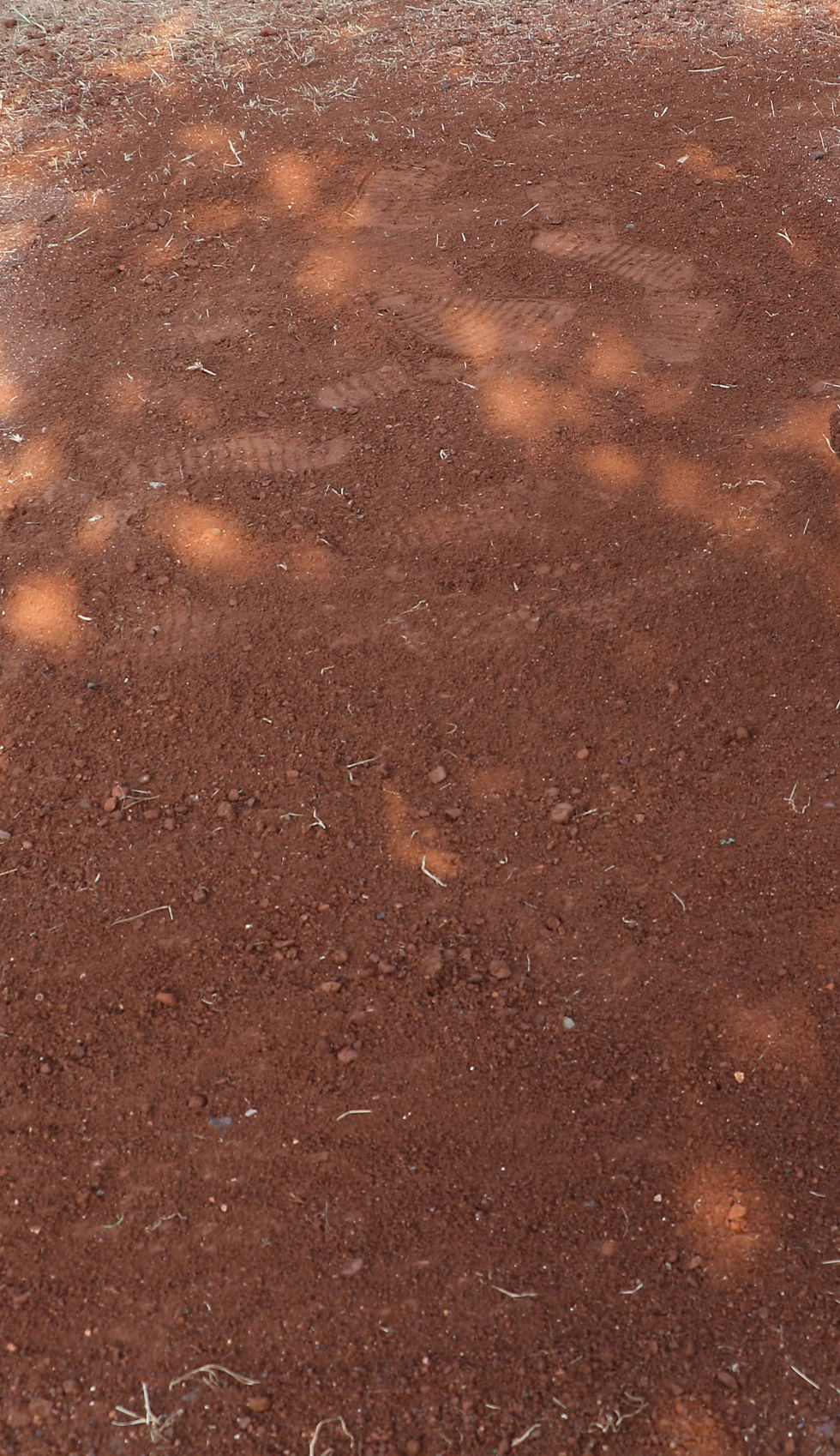
Even though in this installation you are depicting, or exploring, the torrential flood of 2025 that nearly hit Pakistan, you created a narrative of hope. How do you balance these heavier themes with moments of hope and resilience in your art?
In my installation, the torrential flood becomes both a memory and a metaphor; it's a reminder of nature’s immense power and humanity’s fragile place within it. While the work begins in destruction, it does not remain there. I have created the quiet aftermath. The spaces where people rebuild, where the land begins to breathe again - an absolute reality of Mother Nature.
The balance between resilience and hope lies in how the materials - soil, water and grass - articulate and hold dual meanings of loss and life. Soil remembers what was destroyed, but it also nurtures regrowth; water carries away but also reshapes and revives; grass tender and persistent becomes a silent symbol of resilience.
I have allowed the installation to move between silence and resurrection in an infinite manner.
Philosophically, I have approached the flood not only as an environmental disaster but as a spiritual passage that shows how nature teaches that every loss carries within it a promise of renewal. Through meditative observation and community collaboration, my work becomes an act of collective healing where making art is itself an act of faith.

In this installation, soil is a very important conceptual and visual aspect, where soil functions as both spectator and participant. Can you lead us through this conceptual and visual narrative?
In this installation, soil emerges as a living voice, not merely a substance of the earth, but a thinker, witness to the cycle of destruction and resurgence. It holds memory, absorbs time, and carries within the narratives of both grief and rebirth.
As a spectator, soil quietly observes, it memorises what passes through between those who stay and those who leave. It is the ground upon which everything unfolds, yet it remains still contemplative.
As a participant, soil transforms through human and natural interaction. It has cracked, shifted and softened underneath. It has become a part of the artistic process, like moulded by hand, soaked by water and sprouting. Soil acts as a collaborator and reshapes the narrative, never passive but always evolving.
Visually, the surface of soil has become a language of resilience through its color, fissures, and embedded fragments that echo human experience. Conceptually, the soil has connected the ecological and the spiritual aspects, a metaphor for resilience.
In Echoing Ecology, soil becomes a mirror of humanity’s dialogue with nature, where earth and humans are inseparable.

Much like " The Garden Within”, this project is rooted in community. What can you tell us about the process of working with others? How important do you consider the creation of such a project for building resilience with local communities?
Basically, the creation of this project is imperative not only as an artistic gesture but as a social and emotional process of resilience within local communities that have lived through ecological disruption. Awaken an embodied way of being in relationship with an ecology of wholeness– the greater web of life that informs our existence and which permeates our being. Art, in this context, becomes a collective awareness loss and strength.
Secondly, by working closely with the communities, this installation transforms into a space of connection and reanimation. Cultivating these threads of connection with nature as a process shaping the forms and sharing the narratives of flood, participants have engaged in a dialogue that mirrors the sequence of nature itself, like destruction, reflection and regeneration. Through this collaboration, every individual has experienced a part of a larger living ecosystem.
Ultimately, this project creates an opportunity for communities to reflect on their relationship with the land to understand that the soil beneath their feet carries both memory and potential. By grounding the creative act in ecology and collective experience, Echoing Ecology builds resilience not only in landscape but in consciousness.
Some of the project's documentation features landscape interventions, such as leaves purposefully grouped near trees or forming a line, creating a dynamic interplay of colors with the soil. This artistic approach suggests a strong conceptual framework within land art. What narrative are these specific installations trying to convey?
This approach proposes a vivid relationship in human presence aligned with the natural ecosystem, allowing the viewer to reconsider how coexistence with the environment is intertwined with each other. By executing natural materials, the artist positions themselves as a respectful collaborator with the landscape. The interplay of colors and texture between leaves, water and soil also navigates to the idea that landscapes carry the memory. Through this concept, the specific installation is portrayed not as an artistic approach but as the ongoing ontological conversation between nature and mankind.

Your work is heavily ephemeral, focusing on land intervention and community events and initiatives. What led you to choose these specific mediums for your practice?
My entire life has been an act of adapting to change. From migrating back to my parents’ homeland after war broke out in mine, to accepting the occupation of smog during winter as a fifth season in my new home. There is no doubt that art is always inspired by one’s surroundings and personal experiences.
Watching the city I was forced to call home being veiled unforgivingly, concealing its luscious gardens, hiding the serene beauty of Mughal monuments and shrinking its vibrancy to a minute particle of inexistence, shifted something in me. For the first time in my life, I decided to step outside of my comfort, myself. Not adapting to external change, but igniting it from within me instead.
I put down the familiar paintbrush that grounded me to my work and sense of self, and started experimenting with new mediums, particularly Earthen materials. Not only did it help me encapsulate the exactitude of my inspirations, but aided me in its sustainable production, cutting down cost and valuable time significantly. For now, I have been more resilient in my practice along with the community initiatives.
Looking ahead, what are your forthcoming projects, and what new thematic explorations are you currently exploring in your artistic practice?
My forthcoming project is the “ Echoing Ecology 2 “, which is conceptually based on animals and fauna & flora ( plants) affected by the deadliest flood. How they have created a living system of protection, their natural habitats form an unseen collaboration which reflects the essence of ecological harmony to protect, restore and sustain itself. This work has been executed in two installations and one performance-based video. A contemplative narrative of a departed leaf story.

Art and artists play various roles in the fabric of contemporary society. How do you see artistic practice advancing sustainability and social consciousness?
Artists advance sustainability by illuminating ecological precarity, interrogating humanity’s relationship with land and resources, and envisioning modes of coexistence that prioritize stewardship over domination. Through the use of repurposed materials, site-responsive interventions, and community-driven collaborations, they model environmentally conscientious forms of creation. Their work makes visible obscured ecological systems, affirms biodiversity, and underscores the urgent imperative of climate resilience.
Concurrently, contemporary art deepens social consciousness by amplifying marginalized narratives, cultivating communal cohesion, and generating spaces for critical dialogue. Participatory and narrative-based practices foster collective empathy and shared understanding. In environments destabilized by ecological crisis, art becomes a vessel for healing, memory, and resistance, enabling communities to reclaim agency and imagine futures grounded in dignity and hope.
Ultimately, art functions as a vital conduit between knowledge and emotion. It renders abstract phenomena, climate disruption, displacement, and environmental loss into embodied human experience. In doing so, artists expand society’s capacity to envision more ethical, sustainable, and compassionate ways of inhabiting the world.

What message or call to action would you like to share with our readers?
I hope readers recognise the vital need to rebuild our connection with the environment and with one another. In the face of ecological disruption, sustainability begins with awareness and shared responsibility. I encourage individuals to support practices that respect ecosystems, strengthen community bonds, and cultivate resilience. By engaging thoughtfully with the landscapes we inhabit, we not only protect our environment but also shape a more compassionate and sustainable future.
Know more about the artist here.
All images:
Echoing Ecology – Between those who stay and those who leave. Water, grass, soil 15ft x 10ft, water depth 8’, Inner rectangle 8ft x 13ft, 2025.
All images courtesy of Aqeela Sherazi.

You May Also Like

In conversation: Chen Yang
_Lauren%20Saunders.jpg)
In conversation: Lauren Saunders

In conversation: Anne Krinsky

In conversation: Dot Young